
THE FEDERAL CIRCUIT DENIES RANGE OF MOTION’S PETITION FOR EN BANC REHEARING, WITH A DISSENT FROM CHIEF JUDGE MOORE SUPPORTED BY THREE OTHER JUDGES
Range of Motion (RoM) filed a Petition for Rehearing en banc at the Federal Circuit on April 3, 2026. The Court handed down its decision denying the Petition on August 11, 2026.
Briefly, there are two major issues in the case: (1) the proper/improper use of the “sufficiently distinct/plainly dissimilar” test for infringement; and (2) the proper/improper use of functionality analysis in design patent claim construction.
My previous posts, both of them, and my amicus brief in Range of Motion, set forth everything I want to say about the issue of “sufficiently distinct/plainly dissimilar”.
Functionality analysis during claim construction is the issue I did not address in my space-limited amicus brief, and will thus endeavor to do so here.
The court’s entire discussion of functionality during claim construction, both by the majority and by the dissent, is in my opinion a bit off base.
My long-held view, which sadly (to me) has not been widely adopted is this: virtually all designs (with the notable exception of surface decoration) consist of utilitarian elements, i.e., elements which perform some sort of function. And since utilitarian elements have an associated appearance and are part of the claim, which was examined and allowed by the USPTO, their appearance must be taken into account in determining infringement. They are not to be minimized, factored out, set aside, or ignored. See my earlier paper “A Primer on Design Patent Functionality” 36 Berkeley Tech. L.J. 147 (2021); https://papers.ssrn.com/abstract=3971771 (Jan. 2022), in which I wrote:
“[A] product that has utilitarian features has an associated appearance that, if claimed in a design patent, must be taken into account in determining patentability/validity. It is true that obtaining a design patent on a product that has utilitarian (functional) features prevents others from making, using, or selling a product whose overall appearance is substantially the same as the claimed design. However, it does not prevent someone from making, using, or selling a product having the same utilitarian features. In other words, even though the system removes one patented design from the universe of designs available to a competitor, it does not remove the competitor’s ability to use the same utilitarian features among the many choices of designs open to it. Thus, it is … inaccurate to suggest that a design patent somehow protects a design’s utilitarian features. It protects only their appearance in combination with all other features.”
The second issue addressed in the Egyptian Goddess opinion was about whether a court should/could verbalize the scope of the claimed design. In encouraging non-verbalization of the claimed design, the court said that “nothing prevent[s] a court from distinguishing between those features of the claimed design that are ornamental and those that are purely functional, citing OddzOn Prods., Inc. v.Just Toys, Inc., 122 F.3d 1396, 1405 (Fed. Cir. 1997) ("Where a design contains both functional and non-functional elements, the scope of the claim must be construed in order to identify the non-functional aspects of the design as shown in the patent.").”
OddzOn in turn relied on the earlier decisions of Lee v. Dayton Hudson (1988), Read v. Portec (1992), and Elmer v. ICC Fabricating (1995).
Starting with Lee, the patented design was a massage implement consisting of a rough wooden handle terminating in a pair of opposed tennis balls.
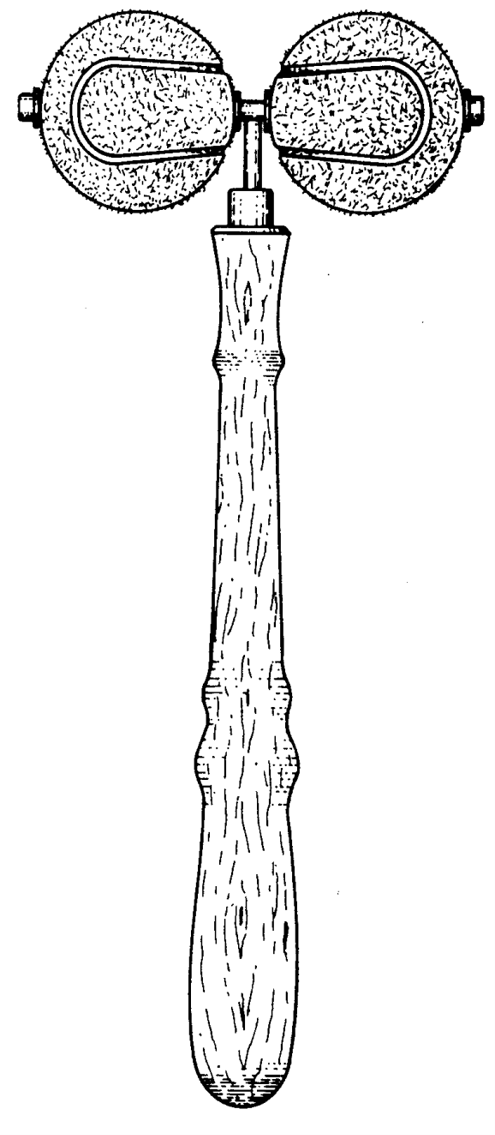
Lee’s Patented Design
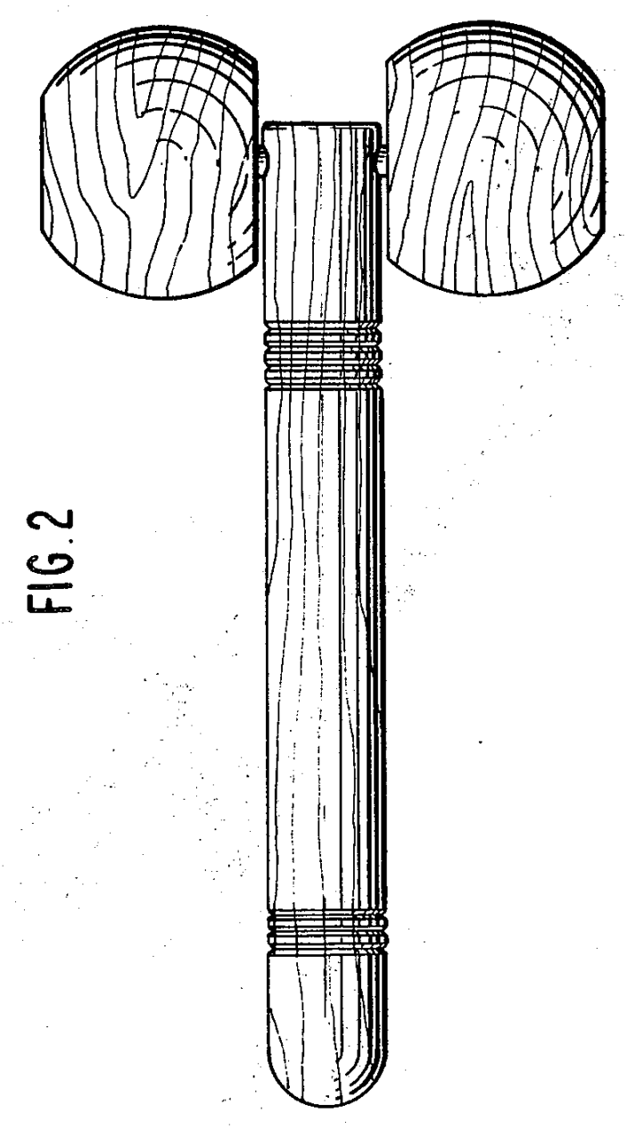
Accused Design
The court enumerated the design aspects of the accused design: the spherical wooden balls, their polished finish and appearance, the proportions, the carving on the handle, etc. Lee countered with the argument that “the inventive concept” of his patent is what was protected, to which the court properly responded: “[A] design patent is not a substitute for a utility patent.” This is the crux of the opinion. Don’t use your design patent to try and protect the broad concept of your design. The design patent only protects the appearance of your design as shown in the drawings.
As pointed out in my 2008 article, Read is deeply flawed. See “The Dysfunctional Read Test: Missing the Mark(man) Regarding the Test for Design Patent Infringement”, 90 Journal of the Patent and Trademark Office Society (JPTOS) 533, July, 2008.
In Read, the defendant Portec took the position that Read’s patented design was invalid based on functionality. The district court had it exactly right when it said: “We do not deny that the Read device performed a function. Nevertheless, its overall design was a choice made by the inventor who could have arranged the functioning parts in other, different designs. It is the ‘overall aesthetics of the various components and the way that they are combined’ which constitute the “design” and which validly may be patented.”
On appeal, Portec wisely abandoned its argument regarding validity, and attacked the jury verdict of infringement by arguing that the only features in common between the patented and accused designs were functional. The only evidence introduced at trial was the patentee’s response “Yes” when asked whether the Gorham test was satisfied.
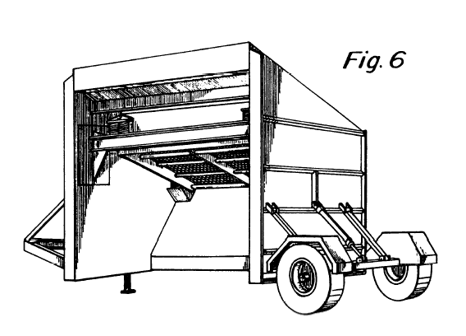
Read’s Patented Design
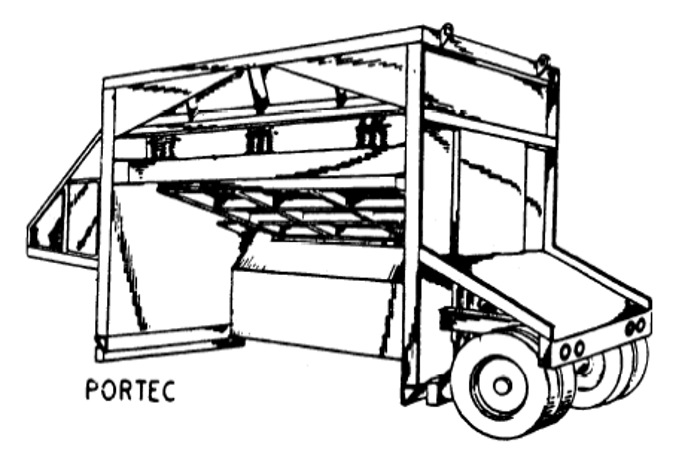
Accused Design
Perhaps unhappy with the dearth of testimony concerning the ornamental features of the patented design, the Federal Circuit said that Read had “misperceived the holding in Gorham” and then made its ill-advised pronouncement: “In Gorham, however, the elements of Gorham’s silverware design were “all ornamental … Where this is not the case, that is, a design is composed of functional as well as ornamental features, to prove infringement a patent owner must establish that an ordinary observer would be deceived by reason of the common features in the claimed and accused designs that are ornamental”.
The Read court went on to say: “it is the non-functional, design aspects that are pertinent to determinations of infringement”, citing Lee v. Dayton-Hudson.
There are several problems with this pronouncement, which unfortunately has been cited in subsequent cases too numerous to list. First, Gorham’s silverware patent was not purely ornamental. The claimed handle performed the rather obvious function of enabling a user to hold the silverware. Second, it is illogical to suggest that there exists a special class of designs that are composed of separable functional and ornamental features. By its very nature an industrial design includes a plethora of de facto functional features. The issue is not to identify other features that are ornamental, since all functional features have their own appearance, i.e. they are themselves ornamental.
The Federal Circuit’s unfortunate suggestion in Read that functional and ornamental features need to be parsed, never before stated in a design patent case, became an overused and distracting element of proof in infringement cases. Functionality thus morphed from a validity issue into an infringement issue.
Elmer (1995) was the earliest Federal Circuit case to be decided after Markman. Elmer’s claim illustrated a triangular car-top sign having corner fins and an upper protrusion.
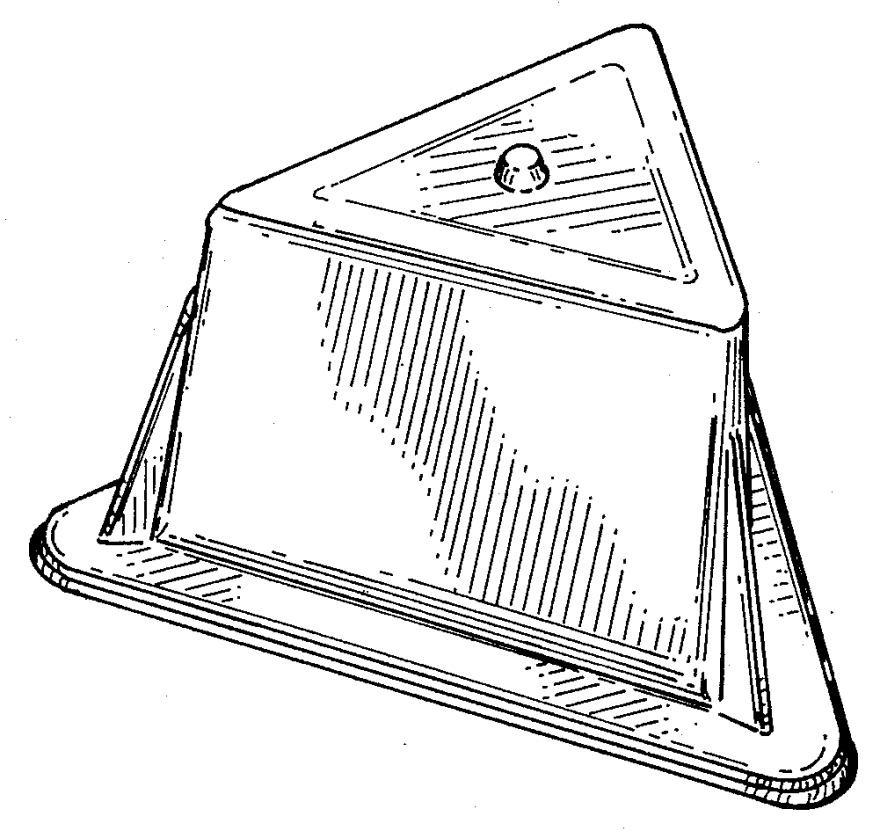
Elmer’s Patented Design
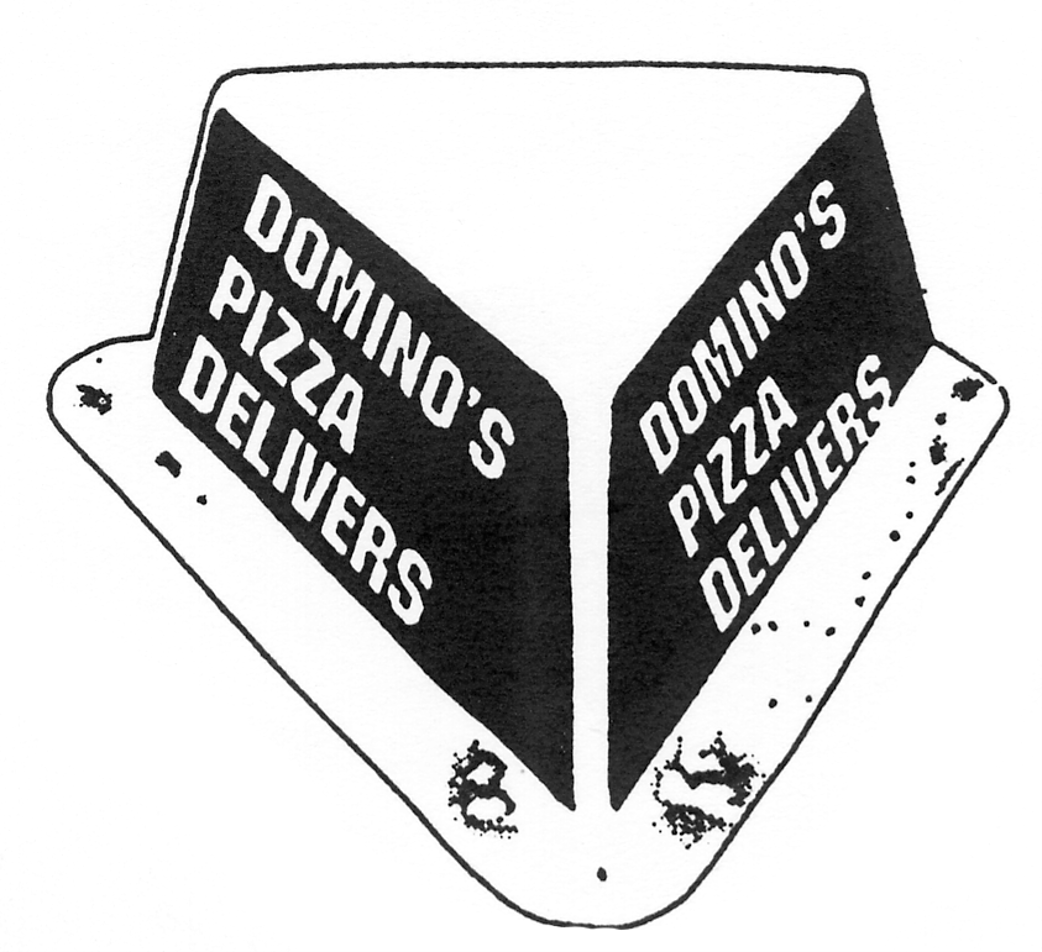
Accused Design
Elmer relied on Read and Lee. Interestingly, it was the patent holder Elmer who asserted that the corner fins and upper protrusion were functional and thus should be ignored during the infringement analysis. The court held otherwise: no infringement.
The OddsOn case of 1997 was the sole case cited in Egyptian regarding functionality and concerned a design patent on a tossing football. Both the patented and accused designs had fins extending from the rear of the football to provide stability when being thrown.
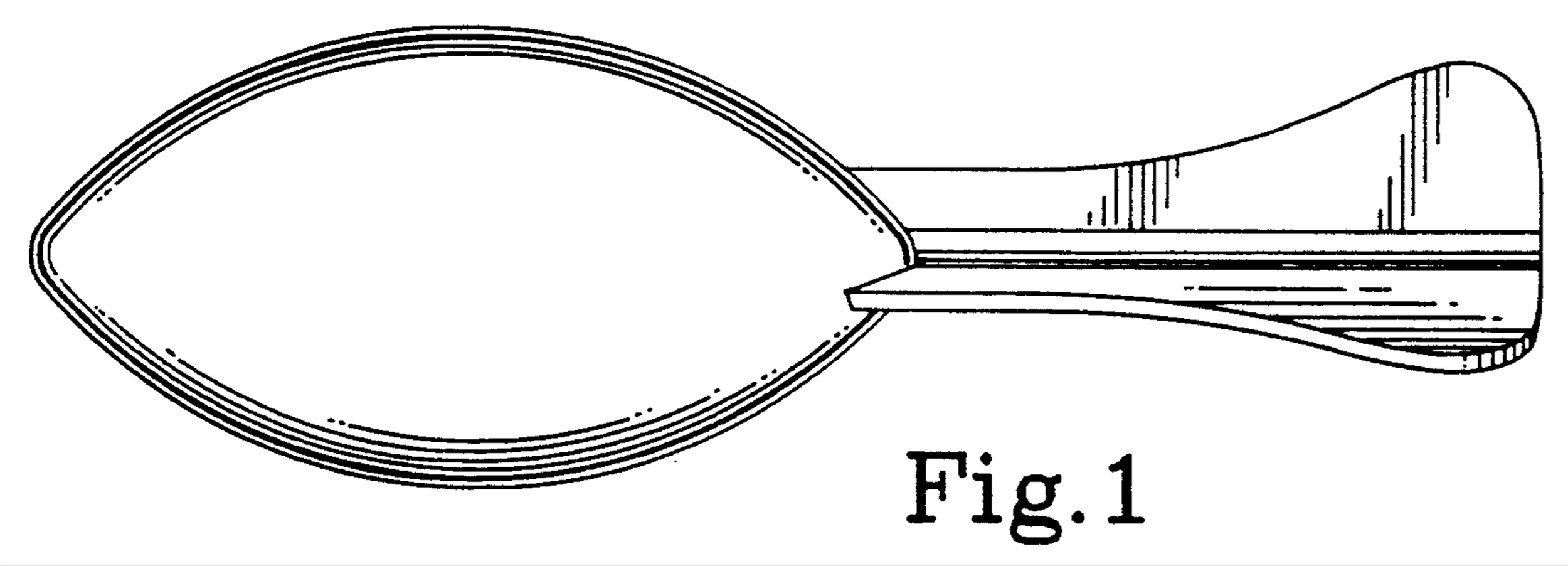
Patented Design
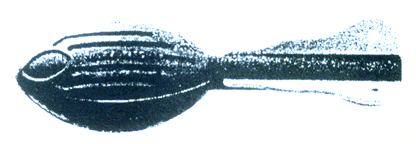
Accused Design
The major design difference was the way the fins extended from the football: the fins of the claimed design were curved when they merged with the rear of the football, while the accused design’s fins were not. The Federal Circuit affirmed the lower court’s finding that “properly limit[ed] the scope of the patent to its overall ornamental visual impression, rather than the broad general design concept of a rocket-like tossing ball.” Pretty clearly, and properly, the court was concerned that the patentee was trying to protect the broad general concept of a rocket-like tossing ball with a design patent, rather than just its ornamental appearance.
The common thread in the precedential cases of Lee, Read, Elmer and OddzOn is that design patents do not protect concepts, or individual parts. If you want to “factor out” something, factor out the broad, general concept(s) of the design. Design patents protect the overall appearance of the claimed design, which can include ornamental and utilitarian (i.e., functional) elements.
The court’s statement in Egyptian thus relied on a thread of cases that stood for something other than what was posited. Rather than segregate ornamental and functional elements, the previous cases stand for the proposition that you simply can’t use a design patent to protect broad, general design concepts. Go get yourself a utility patent.
My claim construction functionality analysis in “The Demise of the Functionality Doctrine in Design Patent Law”, 92 Notre Dame L. Rev. 1471 (2017), covered more recent cases that should have put to bed the functionality claim construction brouhaha. See Sport Dimension, Inc. v. Coleman Co., 820 F.3d 1316 (Fed. Cir. 2016); Ethicon Endo-Surgery, Inc. v. Covidien, Inc., 796 F.3d 1312 (Fed. Cir. 2015).
Ethicon involved the design of an ultrasonic surgical device. One of the design patents at issue, D661,804, claimed the combination of three elements: a U-shaped trigger, fluted torque knob, and rounded activation button.
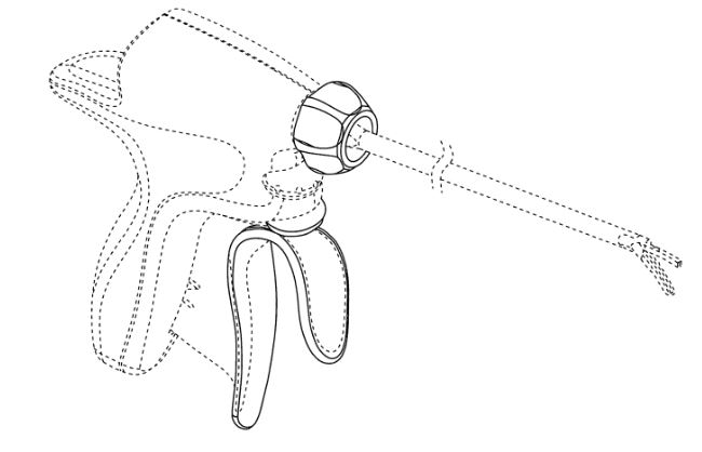
Patented Design
The lower court during claim construction “factored out” each of these so-called “functional” elements, concluding therefore that the ’804 design patent covered “nothing.” The Federal Circuit reversed, saying that the lower court failed to account for the particular appearance of the admittedly utilitarian elements: “the district court ignored the facts that the trigger has a particular curved design, the torque knob has a particular flat-front shape, and the activation button has a particular rounded appearance.”
The Federal Circuit clarified earlier case law about ornamental vs. functional, namely that it is only the broad underlying concepts that cannot be protected—i.e., need to be “factored out” of a design patent claim—in order to avoid using the design patent as a utility patent. One is always left with the overall appearance aspects of those same utilitarian features, in combination with other claimed features, to compare to the accused product in determining infringement.
This is a very significant analytical approach in determining the scope of a design patent claim prior to determining infringement, an approach that had been lost in the loose verbiage of Read, OddzOn, and Egyptian. Namely, all utilitarian elements have a particular appearance. And no matter how visually significant or insignificant the utilitarian elements are, it is their particular appearances, in combination with the appearance of all other claimed elements, that is compared to the accused product in determining infringement. In other words, the appearance aspects of all claimed elements, whether utilitarian or not, need to be taken into account in determining infringement.
In discussing Ethicon, decided the preceding year, the Sport Dimension court noted: “While we agreed that certain elements of the [Ethicon] device were functional, their functionality did not preclude those elements from having protectable ornamentation.”
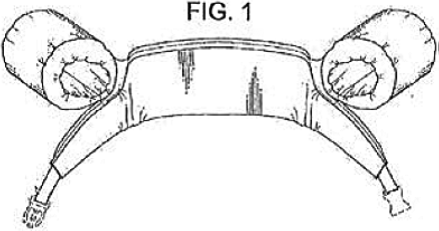
Patented Design
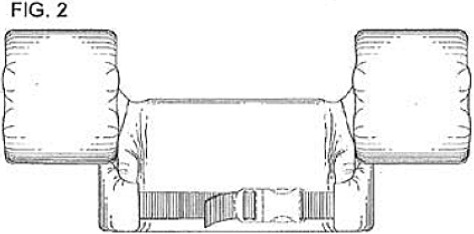
Patented Design
It cannot be overemphasized. All designs by their very nature include utilitarian features, the presence of which does not disqualify the design from being protected by a design patent. Such utilitarian features are not protected as utilitarian features. Rather, it is the design, the associated appearance, of those utilitarian features that are properly protected by a design patent and, along with all other claimed features, are to be compared to an accused product when analyzing infringement.
Thus, in an overly generous interpretation, the statement in Egyptian that a court during claim construction could be helpful to the fact-finder by identifying “functional” features that need to be distinguished from “ornamental” features prior to determining infringement was simply a very inelegant way of saying that a design patent does not protect the utility of utilitarian features, only their particular appearance. Thus, utilitarian features do not need to be identified or “factored out” during Markman claim construction.
Let’s hope that SCOTUS, in considering the inevitable Petition for Cert., will be open to straightening out this admittedly thorny issue, along with the sufficiently distinct/plainly dissimilar issue, to bring some predictability and fairness to design patent law.